
Social-Emotional Learning in Preschool: RULER, MindUP, and Tools of the Mind Explained for Parents
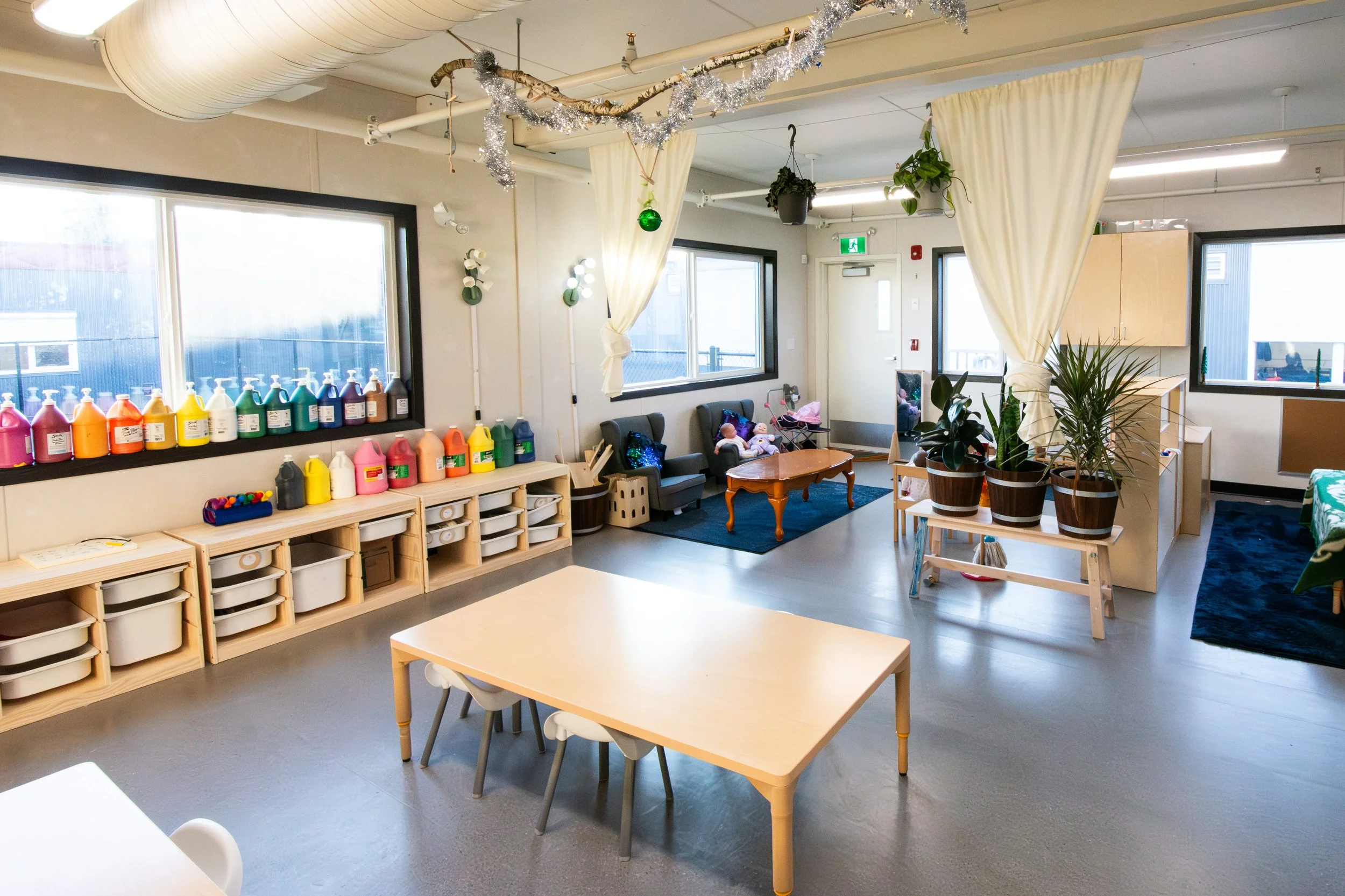
"How do you feel right now?" sounds like a simple question, but for a three-year-old, it can be the hardest one in the language. Recognizing, naming, and managing what we feel are skills — and they have to be taught, modelled, and practised. Programs that build those skills early give children a quiet superpower: emotional regulation that they carry into Kindergarten, friendships, family life, and adulthood.
At SSOCC, social-emotional learning sits beside Reggio-inspired inquiry and nature-based learning as one of the three legs of our approach. This guide walks parents through what social-emotional learning is, the three research-based approaches we draw from — RULER, MindUP, and Tools of the Mind — and what these look like in everyday classroom life in Richmond and Vancouver.
What is social-emotional learning in early childhood?
Social-emotional learning (often shortened to SEL) is the deliberate, ongoing teaching of the skills children need to:
- Recognize their own emotions
- Understand why they feel what they feel
- Express feelings appropriately
- Regulate big feelings without harming themselves or others
- Take the perspective of another person
- Build healthy relationships and resolve conflict
These skills are sometimes lumped together as "soft skills," but the evidence is striking. Children with stronger social-emotional skills in early childhood show better grades, test scores, attendance, and homework completion years later. They are also more likely to enjoy school, build lasting friendships, and avoid mental health challenges in adolescence.
Put simply: SEL is the foundation for all academic preparation.
The RULER approach in preschool
RULER is a specific SEL program that is an evidence-based, whole-school approach to emotional intelligence developed by the Yale Center for Emotional Intelligence. Originally designed for K-12, it has been adapted for preschool — and SSOCC uses a preschool-adapted version with children as young as toddlers.
The acronym RULER stands for five skills:
- Recognize emotions in oneself and others
- Understand the causes and consequences of emotions
- Label emotions accurately with a rich vocabulary
- Express emotions appropriately
- Regulate emotions effectively
In a preschool classroom, RULER shows up as tools, not lectures. You might see:
- A Mood Meter: a colour-coded chart where children identify how they feel on dimensions of energy and pleasantness.
- A Charter: a child-and-educator-created agreement about how the classroom community wants to feel together and how members will help each other get there.
- Emotional vocabulary woven into daily conversation: not just happy and sad, but disappointed, frustrated, proud, curious, anxious, content.
- The Meta-Moment: pausing before reacting, breathing, asking "what would my best self do here?"
The goal is not to make children calm all the time. It is to give them the language and tools to know what they feel and to choose how to respond.
RULER is also used throughout K-12 classrooms throughout the Richmond and Vancouver school districts.
MindUP: mindfulness, brain science, and kindness
MindUP is a curriculum developed in part through the Hawn Foundation that blends mindfulness, neuroscience, positive psychology, and social-emotional learning. In a preschool MindUP classroom, children learn — at their level — how their brains work.
MINDUP is also used throughout K-12 classrooms throughout the Richmond and Vancouver school districts.
At SSOCC, MindUP shows up as:
- Brain breaks: short, regular mindfulness practices where children pause, breathe, and listen.
- "The amygdala is your guard dog": child-friendly language for how the brain reacts to stress, and how breathing can help the thinking part of the brain come back online.
- Gratitude and kindness practices: weekly routines where children name something they noticed, appreciated, or did for someone else.
- Attention and focus games: activities like mindful listening, mindful walking, and noticing sounds in nature.
- Empathy and perspective-taking: stories, role play, and discussions that build understanding of others.
MindUP is especially powerful for young children because it gives them a model. They are not just told to "calm down" — they are taught what is happening in their brains and what they can do about it.
Tools of the Mind: planning, play, and self-regulation
Tools of the Mind is a curriculum rooted in the work of Russian psychologist Lev Vygotsky and his ideas about how play and language scaffold the development of self-regulation. It is one of the most researched early childhood approaches in North America.
At SSOCC, the strongest influence from Tools of the Mind shows up in our approach to dramatic play. Rather than a chaotic free-for-all, dramatic play in our classrooms involves:
- Play planning: children draw or describe what they will play, who they will be, and what they will do.
- Sustained role play: children practise staying in character across longer time periods, building cognitive flexibility and self-regulation.
- Reflection: educators help children look back at what worked, what was hard, and what they might do next time.
The research is clear that children who can plan, hold a plan in mind, and reflect on it are building the foundations of executive function — the cognitive skill set that predicts school readiness more accurately than letter recognition.
How these three approaches work together
RULER, MindUP, and Tools of the Mind are not in competition. Each contributes something distinct, creating a strong and effective holistic Social-Emotional Literacy program for SSOCC classrooms.
- RULER gives children language for emotions.
- MindUP gives children awareness of and connection to their own brain and body.
- Tools of the Mind gives children executive functioning and problem solving skills.
Layered into a Reggio-inspired environment with strong relationships and time in nature, this is what high-quality social-emotional learning looks like in practice.
In the midst of a social conflict, a child in our classrooms might use a Mood Meter to identify that they feel "annoyed," take three slow breaths, ask a friend for space, and then plan their next role in a dramatic play scenario. None of that is one curriculum. It is the result of three woven together by skilled educators.
How parents can support social-emotional learning at home
Child social-emotional development is helped when it is modelled by parents and relationships they experience at home. A few simple practices that align with what we do in the classroom:
1. Name your own feelings out loud. "I'm frustrated that the traffic is so heavy. I'm going to take a few deep breaths."
2. Use a wide emotional vocabulary. Beyond happy and sad — proud, disappointed, curious, content, embarrassed, hopeful.
3. Validate before redirecting. "You're really angry your tower fell down. That makes sense. Want to take a breath together, then try again?"
4. Practise breathing as a family. Not only when feelings are big — also when things are calm.
5. Read books with emotional content. Pause to ask "How do you think they feel? Have you ever felt that way?"
Frequently asked questions about social-emotional learning in preschool
Will my child still learn academics in a social-emotional preschool?
Yes — and the research suggests they will learn academics better. Strong SEL skills predict stronger academic performance later. SEL is preparation for academics, not a replacement for it.
Is RULER only for school-age children?
The original RULER curriculum is K-12, but it has been adapted for preschool. SSOCC uses preschool-appropriate RULER tools with our youngest children.
What is the difference between MindUP and mindfulness?
Mindfulness is a practice. MindUP is a structured early childhood curriculum that uses mindfulness alongside brain science, gratitude, kindness, and perspective-taking.
Where can I find a social-emotional learning preschool in Richmond or Vancouver?
SSOCC's Richmond and Vancouver programs integrate RULER, MindUP, and Tools of the Mind alongside Reggio-inspired and nature-based learning. Contact our registrar at registration@ssocc.ca to learn more, or book a tour online at www.ssocc.ca
Give your child emotional tools that last a lifetime
The best gift early childhood education can give a child is not a head start on reading. It is the ability to know themselves, regulate their reactions, build friendships, and recover from disappointment. We would love to show you what social-emotional learning looks like in our Richmond and Vancouver classrooms.
